
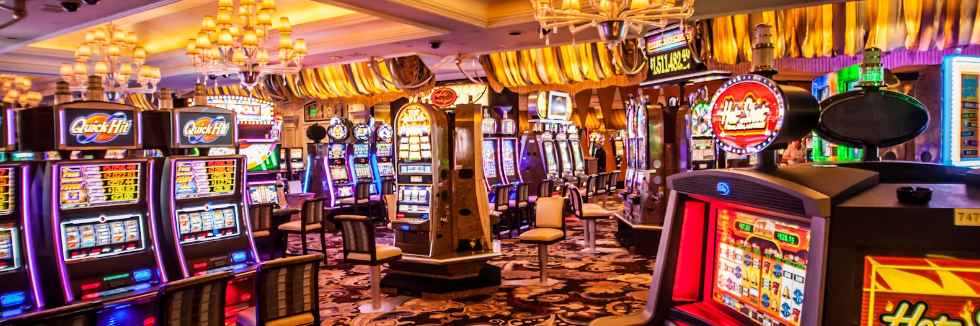
Atlantic City remains the East Coast's premier gambling destination, with nine casinos and thousands of slot machines pulling in billions annually. The standard advice for playing these machines amounts to little more than casino propaganda: insert money, press spin, hope for matching symbols. That advice serves the house. Players deserve something more useful.
The game is rigged. Understanding exactly how it's rigged is the first step toward not getting destroyed by it.
Slot machine operation looks deceptively simple. Cash or ticket vouchers go in. Betting parameters get selected. The spin button gets pressed. Reels rotate and stop, displaying symbols across predetermined paylines. When three or more matching symbols land on an active payline, the machine pays out according to its posted schedule.
Modern video slots typically run five reels with anywhere from 20 to 243 or more ways to win. The critical point most players miss: only active paylines generate payouts. This distinction separates adjustable payline machines from fixed payline designs and matters more than casual players realize. Betting on 25 lines at $0.04 per line costs $1.00 per spin. Cutting active lines to 10 drops the cost to $0.40 but eliminates winning potential on those deactivated lines entirely. That cheaper spin might feel like smart money management, but it's actually just accepting worse odds on a smaller bet.
Every machine has an information button leading to the paytable. This document shows symbol values, special feature triggers, and bonus round rules. Most players never look at it. They should. Two minutes reading the paytable before sitting down beats two hours of confusion about why certain combinations paid and others didn't.
Return to Player percentage indicates what a slot machine theoretically returns over millions of spins. New Jersey Gaming Enforcement Division regulations set a minimum 83% RTP for all slot machines, which translates to the house legally keeping up to 17 cents of every dollar wagered. That's a brutal edge compared to table games. Blackjack with basic strategy runs around 0.5% house edge. Craps pass line bets sit at 1.41%. Even roulette only takes 5.26%. Slots can legally take more than triple that.
Most Atlantic City slots operate somewhere between 85% and 95% RTP in practice. The interesting pattern: higher denomination machines consistently trend toward the upper end of that range. A $5 machine might return 93-95%, while penny machines often struggle to break 87%. The math suggests playing fewer spins at higher stakes beats playing many spins at minimum bets. A player with $100 gets better expected value from 20 spins at $5 than from 500 spins at $0.20, even though the latter feels like more entertainment.
The machines marketed most aggressively to casual players and tourists, the bright, loud penny slots with movie themes and bonus games. The intimidating high-limit rooms with their leather chairs and serious atmosphere offer substantially better returns. Casinos know exactly what they're doing with this arrangement.
The Virtual Reel Deception
Physical reels bear almost no relationship to the mathematical model determining outcomes. This disconnect represents the slot industry's most consequential innovation and its most carefully guarded secret.
In 1984, Inge Telnaes received U.S. Patent 4,448,419, titled "Electronic Gaming Device Utilizing a Random Number Generator for Selecting the Reel Stop Positions." The patent language reveals the entire philosophy: "It is important to make a machine that is perceived to present greater chances of payoff than it actually has within the legal limitations."
Read that again. The inventor, in an official government patent filing, explicitly stated the goal was creating a machine that looks more generous than it actually is. Not as a criticism. As the design specification.
A physical reel might display 22 symbols across 22 stop positions. The controlling computer, however, operates on a virtual reel containing 128, 256, or 368 stop positions. Each virtual position maps to a physical symbol, but the mapping is deliberately unequal. A blank space might correspond to 40 virtual positions. The jackpot symbol might correspond to just one.

Players watch the physical reel and see blank spaces sitting right next to jackpot symbols, separated by millimeters. The visual proximity suggests similar probability. After all, on a physical wheel, adjacent positions would have equal chances of landing. But the virtual reel makes this intuition catastrophically wrong. The probability differential between that blank and that jackpot can exceed 40:1, despite their apparent closeness on the visible display.
Why do manufacturers favor 368 virtual stops specifically? Because 368 cubed equals approximately 49.8 million combinations, falling just below the 50 million maximum odds permitted by New Jersey regulation. The machines push probability to the legal floor. Every design choice optimizes for minimum required payout within the rules.
Two jackpot symbols land on the payline. The third stops one position away, either just above or just below where it needed to be. The human brain reads this as a near win, a close call, almost hitting it.
The neurological response is genuine. The mathematical interpretation is completely wrong.
Near-misses on modern slot machines are not random events that happen to occur. They are engineered outcomes deliberately programmed into the virtual reel weighting system. The blank positions immediately above and below jackpot symbols receive disproportionate weight in the mapping. Players experience far more near-misses than random chance would ever produce. The machines are designed to almost-win more often than probability allows.
Functional MRI research explains the effectiveness of this manipulation. Brain scans show that near-misses activate reward circuitry almost identically to actual wins. The ventral striatum, nucleus accumbens, and dopaminergic pathways respond to "almost winning" with neurochemical enthusiasm typically reserved for genuine success. The brain literally cannot distinguish between almost hitting the jackpot and actually hitting it. Both trigger the same pleasure response, the same motivation to continue, the same feeling that success is close.
This neurological vulnerability transforms losses into psychological pseudo-wins. Players walk away from sessions where they lost significant money genuinely feeling like they came close to winning big. The near-miss effect generates continued play, extended sessions, and deeper losses, all while the player maintains a subjective sense that things went reasonably well.
Research by Dr. Robert Breen at Brown University examined how quickly different types of gambling lead to addiction. The findings were stark. Slot machine players developed problem gambling behaviors three to four times faster than players who stuck to table games or sports betting. Average time from first play to diagnosable gambling addiction: roughly three and a half years for table games, one year for slots. The near-miss mechanism bears primary responsibility for this accelerated trajectory. The machines aren't just games. They're addiction engines refined over decades to exploit specific weaknesses in human neurology.
Every slot machine operates according to a Probability and Accounting Report, known in the industry as a PAR sheet. This document details every mathematical parameter: virtual reel weightings, symbol distribution across positions, actual probability of each winning combination, bonus trigger frequencies, expected hit rate, and confirmed RTP percentage. The PAR sheet tells exactly how the machine is programmed to perform over its operational lifetime.
Players never see PAR sheets. Not ever. These documents remain strictly confidential between manufacturers and casino operators.
This secrecy enables a practice most players don't know exists. A single slot title, Buffalo or Wheel of Fortune, might exist in 8 to 12 different program variations, each running completely different mathematical models with different RTP settings. The cabinet looks identical. The graphics look identical. The paytable showing relative symbol values looks identical. But one version might run a 94% RTP program while another runs 88%. Six percentage points of house edge difference hidden behind the same exterior.
Casino operators choose which program version to install. A Borgata Buffalo and a Resorts Buffalo could be running completely different software underneath identical shells. Nothing visible to players distinguishes the generous version from the stingy version. No posted sign. No serial number lookup. No way to tell.
Volatility and the Illusion of Winning
Most slot players obsess over RTP while completely ignoring volatility, a metric of equal or greater importance for actual playing experience. Volatility, sometimes called variance, describes the distribution pattern of wins and losses over time. Two machines can have identical 90% RTP but feel completely different to play because of volatility differences.
Low volatility slots produce frequent small wins. Bankrolls deplete slowly, session times extend, and dramatic swings remain rare. A $100 stake might sustain four hours of play with wins triggering every few spins, though the payouts rarely exceed 10 times the bet amount. The experience feels gentle, almost friendly. Small wins keep appearing. The money gradually disappears, but slowly enough to not notice in real time.
High volatility slots produce infrequent large wins. Long losing streaks punctuate occasional significant payouts. That same $100 stake might vanish in thirty minutes of nothing but losses, or it might multiply fivefold on a single bonus round hit. Wins occur rarely but can reach 500 or 1000 times the bet amount when they happen. The experience feels brutal and unpredictable. Long stretches of nothing, then sudden explosive results either direction.
Low volatility machines create a dangerous psychological trap. The frequent small wins generate a subjective sense of success, masking the steady erosion of bankroll underneath. Players feel like they're winning, or at least breaking even, while actually losing at a consistent rate. The machine feels kind. It keeps giving little rewards. The gentle bleeding continues for hours until suddenly the money's gone and the player realizes they've been losing all along without noticing.
High volatility machines offer brutal honesty in comparison. Those extended losing streaks make the mathematical reality immediately apparent. There's no comfortable delusion of success to hide behind. Players either win something meaningful or lose quickly. That clarity, however uncomfortable, actually helps rational decision-making about whether to continue playing.
This points to high volatility's underappreciated advantage: the discomfort it produces encourages shorter sessions and faster departure. The psychological comfort of low volatility machines encourages extended play, which mathematically guarantees greater total losses. Any factor that helps players stop playing sooner serves their financial interests, even if it feels worse in the moment.
Slot manufacturers rarely disclose volatility classifications directly. The information might appear in marketing materials aimed at casino operators, but players have to infer variance from whatever hints they can find. Paytable analysis provides the strongest available signal. Look at the ratio between maximum and minimum symbol payouts. High volatility machines show extreme ratios, sometimes 5000:1 between the jackpot combination and the lowest paying win. Low volatility machines compress that ratio dramatically, perhaps 100:1 or even less. Additionally, high volatility paytables concentrate value heavily in top-tier combinations with minimal payouts for common symbols. Low volatility paytables spread value more evenly across the symbol hierarchy.
Hit frequency, when casinos or manufacturers bother to disclose it, directly indicates volatility. Hit frequency represents the percentage of spins producing any payout at all. Frequencies below 20% typically indicate high volatility. Frequencies above 30% indicate low volatility.
Bonus feature structure offers another useful signal. High volatility machines tend to feature bonus rounds with massive theoretical payout potential but low trigger probability. The bonus might pay 1000x the bet when it hits, but it hits once every 200 spins on average. Low volatility machines feature more accessible bonuses with modest payouts, triggering more frequently but never producing dramatic results.
The Randomness That Defeats All Strategy
Every modern slot machine operates under control of a Random Number Generator, a microprocessor continuously producing random numerical values at rates exceeding 1,000 per second. When the spin button gets pressed, the RNG's current value at that precise millisecond determines the outcome. This architecture produces several consequences that contradict common player beliefs.
Timing is completely irrelevant. The outcome of any spin is determined at the exact millisecond the button gets pressed. The RNG cycles through values so rapidly that human timing variations produce effectively random results. Pressing the button quickly or slowly, waiting between spins or hammering them out in rapid succession, playing at certain hours or avoiding others, none of these behaviors influence outcomes in any statistically meaningful way. The superstitions around timing have zero basis in how the machines actually function.
Each spin is completely independent of every other spin. Previous outcomes have exactly zero predictive value for future outcomes. A machine that just paid a massive jackpot has precisely the same probability of paying another jackpot on the very next spin.
A machine that has produced nothing but losses for 10,000 consecutive spins has exactly the same probability of hitting on spin 10,001 as it had on spin 1.
The concepts of "hot" machines and "cold" machines are superstitions without any mathematical foundation whatsoever. Human pattern-recognition instincts, refined over millions of years of evolution to identify genuine patterns in natural environments, misfire catastrophically when confronting truly random sequences. The brain desperately wants to find patterns. It sees a machine pay three times in a row and concludes it's hot. It sees a machine go dry for an hour and concludes it's cold. Every one of these perceived patterns represents cognitive error, not reality. The machines carry no memory of past outcomes.

No betting pattern, no machine-switching protocol, no timing system, no "money management" approach changes what the math guarantees. The RNG and virtual reel weighting system together ensure that extended play produces losses converging on the programmed house edge. This convergence is not a tendency or a likelihood. It's a mathematical certainty for any player who plays long enough.
Accepting this truth provides protection against the magical thinking that enriches casinos. Any system, any method, any approach that claims to "beat" slot machines through skillful play is fraudulent. The sellers are either deliberately deceiving customers or sincerely deluded themselves. The machines cannot be beaten through any strategy because the random number generation makes strategy impossible. The only winning move is playing less.
Playing with Open Eyes
Given the constraints of limited information and guaranteed mathematical disadvantage, rational machine selection comes down to a few key priorities.
Denomination matters most. Select the highest denomination that feels comfortable given the planned bankroll. The RTP advantage of higher denominations is documented, consistent, and substantial. Playing fewer spins at higher stakes produces better mathematical expectation than playing many spins at minimum bets. A player who finds $1 spins acceptable should play $1 machines rather than betting $1 across 20 penny lines.
Volatility should match session objectives. Limited bankroll combined with desire for extended entertainment points toward low volatility machines. Adequate bankroll combined with tolerance for fast results either direction points toward high volatility. Neither is right or wrong, but the mismatch between volatility and expectations causes most player frustration.

Casinos competing aggressively for player loyalty theoretically benefit from installing more generous program versions. Borgata operates the largest and most competitive property in Atlantic City, arguably giving it stronger incentives for player-friendly machine configurations. Hard Rock entered the market relatively recently and wants to build market share, potentially creating similar incentives. Whether these business pressures actually result in better machines remains unconfirmed speculation, but the logic at least holds together.
Effective bankroll management starts before walking through any casino entrance. Determine a loss limit, a specific dollar amount whose complete loss remains acceptable both financially and emotionally. This amount represents entertainment spending, not investment capital, not money needed for rent or groceries or anything else. Entertainment budget only.
The loss limit must be absolute. When reached, play ends. No exceptions. No rationalizing that the next spin could turn things around. No convincing yourself that you're "due" for a win after the losing streak. The discipline to honor predetermined limits separates recreational players from problem gamblers developing serious financial and psychological damage.
Session duration limits provide additional protection. Extended play mathematically guarantees convergence toward expected loss. Shorter sessions reduce exposure to this inevitability. Even a winning session turns into a losing session given enough additional time at the machines. Walking away while ahead requires leaving while ahead.
The relationship between bankroll size and machine volatility deserves attention. High volatility machines require larger bankrolls to survive the variance swings. A $50 bankroll on a high volatility machine might vanish entirely before any significant win materializes, not because the machine is unusually cruel but because high volatility means exactly this kind of outcome happens regularly. Low volatility machines accommodate smaller bankrolls with longer play duration, stretching that same $50 across more spins and more time.
Atlantic City casinos universally offer player rewards programs, loyalty cards that track play and accumulate points redeemable for complimentary services. Using these programs is not optional for anyone trying to play rationally. Refusing to use them is literally giving away free value.
Rewards cards do not affect game outcomes in any way. They simply track wagering volume and return a small percentage as comps: free slot play credits, dining credits at casino restaurants, hotel room discounts, entertainment tickets, parking validation. This return reduces effective losses at zero cost to the player. The casino already knows everything about the machine's mathematical performance. The card just lets the player capture some value back.
Caesars Rewards covers three Atlantic City properties: Caesars, Bally's, and Harrah's. Borgata operates the M life Rewards program (connected to the MGM network). Hard Rock runs its own Unity Rewards program. Players who visit multiple properties should enroll in multiple programs. The cards are free. The points accumulate. There's no downside.
The Atlantic City Market
Nine casinos currently operate in Atlantic City, all regulated by the New Jersey Casino Control Commission and Division of Gaming Enforcement.
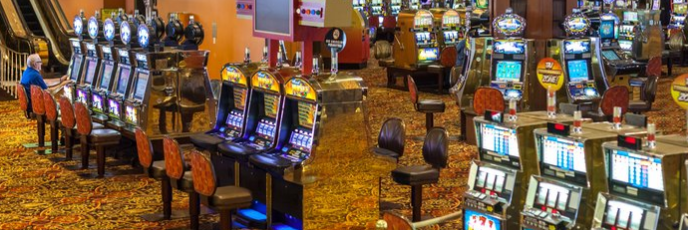
Borgata Hotel Casino & Spa dominates the market with the largest gaming floor, widest machine selection, and most sophisticated overall player demographic. Its market-leading competitive position creates genuine incentives for maintaining machine configurations that keep serious players coming back. The property sits slightly removed from the boardwalk in the marina district, attracting a somewhat different crowd than the boardwalk casinos.
Hard Rock Hotel & Casino Atlantic City occupies the former Trump Taj Mahal building, reopened after that property's bankruptcy and closure. The Hard Rock targets younger demographics through entertainment-focused positioning, concert venues, and aggressive promotional activity. Ocean Casino Resort also emerged from previous ownership's bankruptcy, reopening with new management actively pursuing market share through promotional generosity sometimes exceeding established competitors.
Tropicana Atlantic City and the Caesars Entertainment properties (Caesars, Bally's, Harrah's) represent the established mid-market segment with mature rewards programs and consistent operational standards. Golden Nugget Atlantic City and Resorts Casino Hotel occupy smaller market positions with correspondingly limited machine selections, though potentially less crowded conditions provide some compensating advantage.
Geographic concentration along the boardwalk and in the marina district allows easy movement between properties. Unfavorable conditions at one casino, crowding, machine availability, unsatisfying promotional offerings, can be escaped within minutes via boardwalk walking or quick car ride.

United States tax law treats gambling winnings as taxable income without any exception. The IRS wants its cut regardless of whether the player is ahead or behind lifetime.
Slot machine wins of $1,200 or more trigger mandatory W-2G reporting. The casino withholds the player's Social Security number and reports the win directly to the Internal Revenue Service. The player receives paperwork. The IRS receives notification. There is no ambiguity about whether this income needs reporting, the government already knows about it. Beginning in 2026, this reporting threshold increases to $2,000, with annual inflation adjustments thereafter. Wins below the threshold still count as taxable income. The reporting requirement just doesn't kick in automatically.
Gambling losses can offset gambling winnings for tax purposes, but only under specific conditions. The taxpayer must itemize deductions rather than taking the standard deduction. Losses can only offset winnings, not other income. Someone winning $5,000 and losing $8,000 across a year may deduct only $5,000 in losses. The remaining $3,000 net loss provides zero tax benefit.
Maintaining detailed records proves important for anyone who might need to document losses: dates of gambling activity, casino locations, amounts won and lost at each session, and player card records showing activity. The IRS accepts rewards program statements as valid documentation of gambling activity when auditing returns.
The Designed Environment
Casino architecture and design serve a singular purpose: maximizing player time on machines. Every element of the physical environment reflects decades of deliberate psychological manipulation research, refined through trial and observation across hundreds of properties worldwide.
The absence of windows eliminates natural light cues. The absence of visible clocks removes time awareness. Players lose track of how long they've been playing, extending sessions well beyond any intention they had walking in. What felt like an hour turns out to be four. The disorientation is entirely by design.
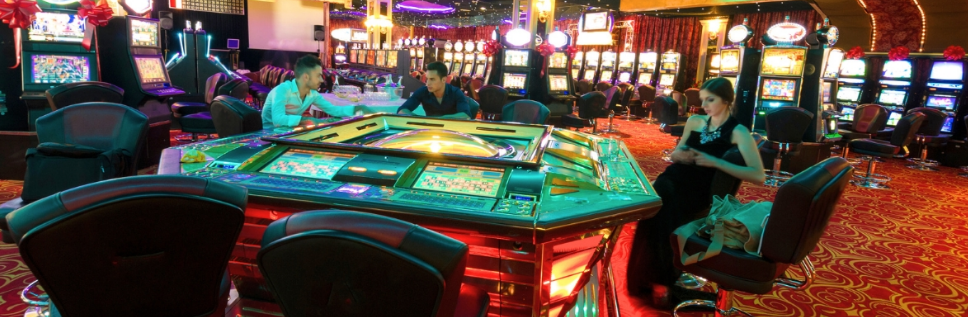
Floor layouts follow maze-like patterns specifically engineered to make exits difficult to locate while ensuring continuous exposure to gaming options. Getting out requires walking past more machines. Getting to the bathroom requires walking past machines. Getting to the restaurant requires walking past machines. The path of least resistance always leads to more gambling.
Slot machine placement follows sophisticated analytics models. High-visibility machines near entrances and main walkways feature prominent jackpot displays showing big numbers, attracting attention and drawing players deeper onto the gaming floor. High-denomination machines cluster in quieter areas away from foot traffic, creating a more serious atmosphere for players seeking concentration and willing to bet larger amounts.
Lighting receives careful calibration. Not too bright (feels harsh), not too dim (feels sleepy). The goldilocks zone that encourages alertness and continued activity. Sound design ensures that wins,even small ones, broadcast celebratory noises across the floor, creating an ambient impression of frequent success happening all around. Bells ring. Coins clatter (digitally simulated now, but still present). Music plays. The sonic environment says: people are winning here.
Losing, by contrast, produces no sound at all. The asymmetry is total. Every win announces itself. Every loss happens in silence. The overall impression created is that winning happens constantly even though the mathematical reality makes losses far more common.
Even scent distribution through ventilation systems receives optimization at many properties. Certain smells encourage alertness and positive mood. The air itself is engineered.
Recognizing the casino environment as a deliberately designed experience rather than neutral space provides partial defense. Awareness helps. Knowing that every design choice exists to extend play and increase losses creates some psychological distance from the manipulation. But only partial defense. The techniques work even on people who understand them. The brain responds to environmental cues whether or not the conscious mind recognizes what's happening.